
How Product Managers Influence Stakeholders Without Authority
- Leadership
- 4 min read

Akansha Chauhan – Product Marketer
One of the biggest misconceptions about leadership is the belief that authority creates influence.
Most people assume influence follows hierarchy. A CEO has influence because of their position. A manager has influence because they control resources. An executive has influence because they make decisions.
That logic seems reasonable until you look closely at how modern organizations actually operate.
The most effective product managers often have no direct authority over the people they depend on most.
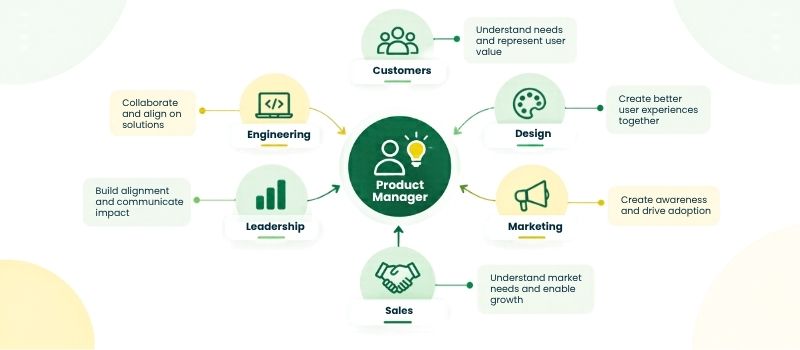
Engineering does not report to them. Design does not report to them. Sales does not report to them. Marketing does not report to them.
Even senior product leaders frequently find themselves responsible for outcomes without possessing formal control over the teams required to achieve them.
Yet some consistently move organizations forward while others struggle to gain traction.
The difference is rarely intelligence. It is influence.
In product organizations, influence is not a leadership skill. It is the leadership skill.
- Stakeholder management is one of the most important skills in product leadership.
- Influence grows through credibility, relationships, clarity, and alignment.
- People support decisions they help create.
- Executive communication helps leaders create clarity and alignment.
- Product managers succeed by influencing outcomes without relying on authority.
Why Most Product Managers Struggle With Stakeholder Management
Many product managers enter the role believing their primary responsibility is making product decisions.
Over time, they discover a more complicated reality.
The hardest part of the job is rarely identifying the right answer. The hardest part is creating alignment around that answer.
Every stakeholder views the business through a different lens:
- Engineering leaders worry about technical debt
- Sales leaders focus on revenue opportunities
- Marketing leaders think about market positioning
- Customer success teams see retention risks
- Executives evaluate strategic priorities
None of these perspectives is wrong.
The challenge is that they often compete for attention, resources, and investment. This is where stakeholder management becomes difficult.
The problem is not disagreement. Healthy organizations need disagreement.
The problem emerges when disagreement prevents progress.
Many product managers respond by pushing harder. They defend their roadmap more aggressively. They present additional data. They schedule more meetings.
Ironically, these actions often make influence harder rather than easier.
The Strategic Insight: People Support What They Help Create
One of the most important lessons in leadership is that alignment rarely comes from persuasion alone.
People are far more likely to support decisions they helped shape. This principle explains why some product managers gain influence quickly.
They spend less time making decisions and more time building decisions collaboratively.
Consider two different approaches.
The first product manager spends weeks developing a strategy independently and presents it during a stakeholder review.
The second product manager brings stakeholders into the conversation earlier, incorporates feedback, surfaces concerns, and creates shared ownership throughout the process.
The outcome is often predictable.
One leader gains compliance. The other gains commitment. The difference matters.
Compliance disappears when pressure increases. Commitment survives uncertainty.
The strongest product leaders understand this distinction deeply.

Influence Begins Long Before Decisions Are Made
Many people think influence happens during presentations. In reality, influence usually happens before the meeting begins.
By the time an important roadmap review, investment discussion, or executive presentation takes place, most stakeholders have already formed opinions.
The leaders who consistently influence decisions understand this dynamic:
- They invest time in individual conversations
- They identify concerns early
- They understand motivations
- They build relationships before they need support
This is one reason experienced executives rarely walk into high-stakes meetings hoping to convince people.
They enter knowing where support exists, where resistance exists, and what concerns still need to be addressed.
Influence often looks effortless from the outside. Behind the scenes, it is usually the result of deliberate preparation.
Why Data Alone Rarely Changes Minds
Product organizations often celebrate data-driven decision-making.
Data is essential. Data alone is rarely sufficient.
Anyone who has spent time in leadership meetings has witnessed intelligent people reviewing the same information and reaching different conclusions.
This happens because decisions are rarely based purely on facts. They are shaped by incentives, experiences, risk tolerance, and organizational priorities.
- A Product Manager may see customer feedback supporting a new initiative
- A finance leader may see increased costs
- An engineering leader may see implementation risk
- An executive may see a strategic distraction.
Each interpretation can be reasonable. This is why influence requires more than evidence. It requires context.
Great product leaders connect information to stakeholder priorities.
They help people understand how a decision supports broader organizational goals. That capability transforms communication into influence.
The Four Sources Of Influence
Many professionals assume influence comes from expertise alone. Expertise helps. Sustainable influence usually comes from four sources.
- Credibility: People trust leaders who consistently demonstrate sound judgment. Credibility compounds over time. Every strong decision strengthens future influence.
- Relationships: Influence grows when stakeholders believe a leader understands their goals and constraints. Relationships create trust before conflict emerges.
- Clarity: Organizations are full of complexity. Leaders who simplify complexity become valuable. Clear communication creates confidence. Confidence accelerates decisions.
- Alignment: The strongest leaders connect individual priorities to shared outcomes. When stakeholders see how success benefits everyone, resistance often decreases naturally.
Together, these four capabilities create influence that extends far beyond formal authority.
Why Executive Communication Matters More Than Ever
As product leaders become more senior, communication becomes increasingly important.
Many product managers focus heavily on explaining their recommendations. The most influential leaders focus on framing decisions. The distinction is subtle.
One communicates information. The other shapes understanding.
Executives operate under constant pressure. They manage competing priorities, incomplete information, and limited time.
The leaders who gain influence are often the ones who create clarity amid uncertainty. This is why executive communication is closely connected to stakeholder management.
People support leaders who help them make sense of complexity. Influence frequently begins with clarity.
What High Influence Product Leaders Do Differently
After observing successful product leaders across industries, several patterns appear consistently.
- They spend more time listening than arguing
- They understand stakeholder incentives before proposing solutions
- They identify areas of agreement before discussing areas of disagreement
- They frame conversations around shared outcomes rather than functional priorities
Most importantly, they recognize that influence is earned continuously rather than activated only when needed.
This creates powerful second-order effects:
- Trust accumulates
- Relationships strengthen
- Alignment becomes easier
- Decision cycles become shorter
Over time, influence becomes a competitive advantage inside the organization.
A Practical Framework For Influence Without Authority
When facing stakeholder resistance, ask five questions:
- What does this stakeholder care about? – Understand incentives before presenting solutions.
- What risks do they see? – Resistance often reflects concerns that have not been addressed.
- Where do our goals overlap? – Shared outcomes create alignment.
- What information are they missing? – Sometimes disagreement reflects an incomplete context.
- How can they contribute? – People support initiatives they help shape.
This framework shifts conversations away from persuasion and toward collaboration. That shift often produces better decisions and stronger relationships.
How Product Managers Influence Stakeholders
The most effective product managers influence stakeholders by building trust, creating alignment, understanding incentives, communicating clearly, and involving people in decision-making.
They recognize that influence comes from relationships and credibility rather than hierarchy.
This approach becomes increasingly important as organizations grow more complex and cross-functional collaboration becomes essential.
The Leadership Lesson
Product management is one of the few leadership roles where responsibility regularly exceeds authority. That reality frustrates some professionals.
The best leaders see it differently. They recognize that influence developed without authority is often stronger than influence created by hierarchy.
Authority can secure compliance, influence creates commitment, and in modern product organizations, commitment is what moves teams forward.
Frequently Asked Questions
1. How do Product Managers influence stakeholders?
Product managers influence stakeholders through trust, relationship building, clear communication, alignment around shared goals, and collaborative decision-making.
2. What is Stakeholder Management in Product Management?
Stakeholder management is the process of aligning cross-functional teams, leaders, and decision makers around product priorities and business outcomes.
3. Why is influence important for Product Managers?
Most product managers do not directly manage the teams they depend on, making influence essential for driving progress and achieving results.
4. What are the key skills for influencing without authority?
Credibility, relationship building, communication, empathy, strategic thinking, and alignment are critical influence skills.
5. How can Product Leaders improve Executive Communication?
Focus on business outcomes, simplify complexity, understand stakeholder priorities, and frame recommendations within organizational goals.