
What Modern Product Management Looks Like in the AI Era
[ipl_post_meta]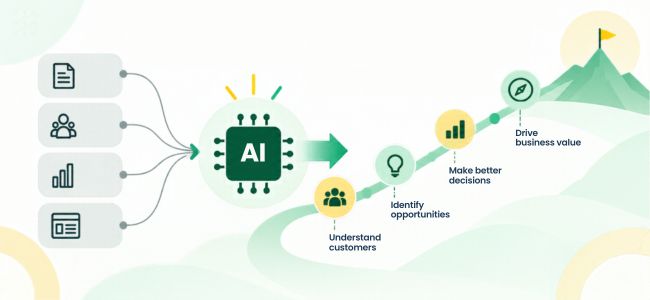
What Modern Product Management Looks Like in the AI Era
- blogs, product management
- 4 min read

SaiSatish Vedam – Chief Product Officer, IPL
Artificial intelligence has sparked one of the biggest transformations in product management since the rise of agile development. Tasks that once consumed days or even weeks – from writing product requirement documents to generating wireframes and conducting competitive research – can now be completed in a fraction of the time using AI-powered tools.
This rapid shift has led to an important question: What is the role of a product manager when AI can automate so much of the work?
The answer lies in understanding what product management was always meant to be. The profession was never intended to revolve around documentation, feature prioritization, or managing development ceremonies. Those activities became synonymous with product management over time, but they represent only a small part of the discipline. The real purpose of the role has always been to identify meaningful market opportunities, make informed business decisions, and guide cross-functional teams toward building products that create lasting value.
Rather than replacing product managers, AI is eliminating repetitive execution work and pushing the profession toward higher-value strategic thinking. As routine tasks become automated, organizations increasingly need professionals who can understand customers, evaluate market opportunities, balance business objectives, and make decisions that technology alone cannot.
This evolution is redefining not only what product managers do every day but also the skills, mindset, and career paths required to thrive in an AI-first world.
- AI is shifting product management from execution to strategy, making business judgment more valuable than documentation.
- The biggest competitive advantage for product managers is choosing the right problems to solve – not simply building more features.
- Modern product managers must balance customer needs, business goals, technical feasibility, and market opportunities to drive product success.
- Hiring is increasingly based on demonstrated skills and real-world problem-solving rather than certifications alone.
- The future belongs to AI-enabled product managers who combine technology with human judgment, leadership, and customer empathy.
AI Isn't Replacing Product Managers - It's Redefining the Role
One of the biggest misconceptions surrounding AI is that it makes product management easier. In reality, AI is making the role fundamentally different.
For years, many organizations – particularly technology companies – gradually narrowed product management into an execution-focused function. Product managers became responsible for writing detailed requirements, maintaining product backlogs, creating user stories, and coordinating engineering teams. Success was often measured by how efficiently features moved through development rather than whether the right problems were being solved.
AI is rapidly changing this equation.
Today, generative AI can draft product requirement documents, create user stories, summarize customer feedback, generate prototypes, and even assist with technical documentation. Activities that once justified an entire role are becoming increasingly automated.
This doesn’t mean product management is disappearing. It means that feature management is becoming less valuable, while strategic product leadership is becoming far more important.
The future belongs to professionals who can answer questions that AI cannot resolve on its own:
- Which customer problem is truly worth solving?
- Is the opportunity large enough to justify investment?
- Which market segment should the business prioritize?
- How should limited resources be allocated?
- What trade-offs create the greatest long-term business value?
These decisions require judgment, context, commercial thinking, and an understanding of human behaviour – qualities that remain uniquely valuable despite advances in AI.
In many ways, AI is removing the administrative layers that accumulated around product management over the past decade. Instead of spending hours documenting requirements, modern product managers can dedicate more time to customer discovery, strategic planning, competitive positioning, and business growth.
This shift also explains why organizations increasingly differentiate between professionals who simply understand product management concepts and those who can apply them effectively. Knowing frameworks is no longer enough when AI can access the same knowledge instantly. Competitive advantage now comes from interpreting information, asking better questions, and making better decisions.
The AI era isn’t reducing the importance of product management. It’s restoring the profession to its original purpose: solving meaningful market problems while creating sustainable business value.
What Modern Product Management Really Means in the AI Era
If AI is taking over many execution-heavy responsibilities, what remains at the core of product management?
The answer lies in returning to the discipline’s original purpose. Product management is not about shipping features – it is about identifying opportunities that create value for customers and sustainable growth for the business.
A modern product manager operates at the intersection of customer needs, market dynamics, technology, and business strategy. Every decision begins with understanding where genuine opportunities exist rather than deciding what feature should be built next.
A useful way to define product management is as the art and science of identifying market opportunities and working with cross-functional teams to create products that are compelling, competitive, and profitable. Every part of this definition carries weight.
Market Opportunity Comes Before Product Ideas
One of the biggest traps organizations fall into is starting with solutions instead of problems.
With AI-powered coding tools, no-code platforms, and rapid prototyping software, building products has become significantly faster. A functioning prototype that once required weeks of engineering effort can now be created in hours.
The challenge, however, is no longer building products.
The challenge is ensuring they solve problems that genuinely matter.
Many organizations are already seeing an explosion of prototypes because AI has lowered the barrier to creation. But a prototype alone says nothing about whether customers actually need the product or whether the opportunity is commercially viable.
Before investing resources, product teams must answer a few critical questions:
- Who experiences this problem?
- How significant is the pain point?
- How many people face it?
- Are they willing to pay for a solution?
- Is the market large enough to justify investment?
Without convincing answers to these questions, even the most polished product is unlikely to succeed.
Great Products Balance Three Essential Dimensions
Every successful product sits at the intersection of three fundamental considerations.
Desirability asks whether customers genuinely want the solution. It focuses on understanding unmet needs, validating assumptions, and ensuring the product addresses a meaningful problem.
Feasibility examines whether the organization has the technical capability, resources, talent, and infrastructure required to build and maintain the solution effectively.
Viability evaluates whether the product makes business sense. Even an excellent product can fail if it cannot generate sustainable revenue or support long-term business objectives.
AI can accelerate research, generate ideas, and even simulate possible solutions across all three dimensions. However, deciding whether a product is truly desirable, feasible, and viable still depends on human judgement.
Product Managers Create Business Success, Not Just Product Success
A common misconception is that product managers are responsible for delivering features.
In reality, features are simply outputs.
The real objective is achieving business outcomes.
That means looking beyond delivery metrics and asking broader questions:
- Will solving this problem strengthen the company’s competitive position?
- Does this initiative support long-term business strategy?
- Will customers continue using the solution after launch?
- Can the business profitably sustain and scale it?
This perspective separates product management from execution-focused roles.
Project managers ensure work is delivered on time, within budget, and according to plan.
Product managers determine whether the work should be undertaken in the first place.
That distinction becomes even more important in the AI era. As technology makes execution faster and less expensive, the ability to make sound strategic decisions becomes the true differentiator. Organizations no longer struggle to build software they struggle to decide what is actually worth building.
The most valuable product managers are those who consistently answer that question better than anyone else.

The Skills That Define Successful Product Managers in the AI Era
As AI automates repetitive tasks, the value of product managers is shifting from execution to decision-making. The professionals who thrive in this new landscape will not necessarily be those who know the most tools but those who possess the strongest strategic thinking, communication, and business judgment.
Instead of replacing human expertise, AI is exposing where human expertise matters most.
Strategic Thinking Is Becoming the Core Competency
For years, many product teams spent significant time writing requirements, maintaining roadmaps, documenting user stories, and coordinating sprint activities. AI can now perform much of this work faster and often with impressive accuracy.
The competitive advantage has therefore moved higher up the value chain.
Modern product managers are increasingly expected to answer questions such as:
- Which customer segment deserves the highest priority?
- Which opportunities align with the company’s long-term strategy?
- What trade-offs should the business make?
- Which initiatives deserve investment, and which should be rejected?
These are not questions AI can answer independently because they require context, commercial judgment, and an understanding of organizational priorities.
As execution becomes easier, decision quality becomes the defining characteristic of strong product leadership.
AI Is a Force Multiplier – Not a Substitute for Expertise
One of the biggest advantages AI offers product managers is speed.
Take competitive analysis as an example.
Traditionally, a comprehensive competitor study involved researching products, comparing features, evaluating pricing models, understanding customer segments, analyzing positioning, and synthesizing insights into actionable recommendations. Depending on the complexity of the market, this could easily take several weeks.
Today, AI can significantly accelerate this process by gathering information, organizing findings, summarizing trends, and even highlighting strategic differences.
But speed alone doesn’t create value.
The real skill lies in evaluating whether the insights are accurate, identifying what has been overlooked, and determining which findings actually matter to the business.
The same principle applies to market research, pricing strategy, customer discovery, roadmap planning, and product strategy. AI can assist with analysis, but product managers remain responsible for interpreting results and making informed decisions.
Knowing how to use AI effectively therefore becomes less about writing prompts and more about asking the right business questions.
Leadership Skills Are Becoming More Valuable Than Ever
Ironically, the more work AI automates, the more important human interaction becomes.
Product management has always been a highly cross-functional discipline. Product managers collaborate with engineers, designers, marketers, executives, sales teams, customer success teams, and external stakeholders – often without having direct authority over any of them.
Success depends on influence rather than hierarchy.
That means modern product managers must become exceptional at:
- Storytelling that helps stakeholders understand customer problems
- Influencing decisions without formal authority
- Facilitating alignment across cross-functional teams
- Communicating complex ideas with clarity
- Building consensus around strategic priorities
These capabilities cannot be outsourced to AI.
An AI-generated presentation may contain excellent insights, but it cannot build trust, persuade skeptical stakeholders, or navigate organizational dynamics during difficult decisions.
In many organizations, these leadership skills are becoming stronger differentiators than technical expertise.
Technical Fluency Still Matters – but Context Matters More
The rise of AI has also created confusion about technical expectations for product managers.
Many professionals assume they now need expertise in machine learning, neural networks, Python programming, or advanced data science to remain relevant.
For most product roles, that simply isn’t true.
The level of technical knowledge required depends on the product being built.
A product manager working on foundational AI models or machine learning infrastructure naturally requires deeper technical understanding. However, the vast majority of product managers operate at the application layer, where the focus is on creating products that solve customer problems rather than developing AI models from scratch.
For these roles, technical fluency means understanding:
- What AI can and cannot do.
- How AI capabilities influence product decisions.
- Responsible and ethical AI practices.
- Basic data literacy.
- How to collaborate effectively with technical teams.
This level of understanding enables meaningful conversations with engineers while allowing product managers to remain focused on customers, markets, and business outcomes.
The AI era is not creating a need for every product manager to become an AI engineer. Instead, it is creating a need for product managers who can intelligently combine business strategy, customer understanding, and AI capabilities to deliver products that create real value.
Building a Successful Product Management Career in the AI Era
The evolution of product management is also reshaping how professionals enter and grow in the field. While AI is changing daily workflows, it is also changing what employers value during hiring.
The result is a market where demonstrable skills matter far more than theoretical knowledge.
Hiring Is Shifting from Credentials to Capability
For many years, professionals looking to transition into product management followed a familiar path: complete a certification, add it to a resume, and apply for product roles.
That approach is becoming less effective.
Hiring managers today are increasingly looking beyond certificates to answer a much simpler question:
Can this person actually perform the role?
Knowing product frameworks, agile methodologies, pricing models, or customer discovery techniques is useful, but knowledge alone rarely differentiates candidates. AI can retrieve the same information in seconds.
What employers want is evidence that a candidate can apply that knowledge in real-world situations.
For example, understanding pricing strategy is very different from actually pricing a product. Learning about customer discovery is different from interviewing users, identifying patterns, and translating insights into product decisions.
That distinction between knowing and doing has become one of the biggest differentiators in today’s hiring market.
Portfolios Are Becoming More Valuable Than Certifications
As organizations prioritize skills over credentials, portfolios are becoming increasingly important.
A strong product portfolio demonstrates how someone approaches problems, structures thinking, validates assumptions, and makes decisions. It showcases practical experience rather than simply listing concepts that have been studied.
For professionals transitioning from other functions, this can be a significant advantage.
Rather than relying solely on certifications, aspiring product managers can build credibility by documenting real projects, analysing existing products, redesigning user journeys, creating pricing strategies, conducting competitive analyses, or solving business cases.
These practical demonstrations provide hiring managers with something far more valuable than a certificate – they provide evidence of problem-solving ability.
Previous Experience Is an Asset, Not a Limitation
A common concern among professionals moving into product management is whether they need to start from scratch.
In reality, some of the strongest product managers come from adjacent disciplines because they already possess transferable skills.
For example:
- UX designers bring expertise in user research, empathy, usability, and customer behaviour.
- Sales professionals develop a deep understanding of customer pain points, objections, and buying decisions.
- Marketing professionals understand positioning, customer segmentation, messaging, and go-to-market strategy.
- Project managers excel at cross-functional coordination, stakeholder management, and execution.
- Quality assurance professionals develop analytical thinking, attention to detail, and product quality perspectives.
The goal is not to discard these experiences but to build on them.
The strongest career transitions happen when professionals combine existing domain expertise with product management capabilities instead of attempting a complete career reset.
Product Management Is About Business Decisions
One of the biggest misconceptions is that product managers primarily manage development teams or oversee feature delivery.
In reality, their most important responsibility is making business decisions.
Every product initiative competes for limited time, budget, engineering capacity, and organizational attention. Choosing one opportunity inevitably means saying no to another.
These trade-offs define product management.
Successful product managers continuously evaluate questions such as:
- Which customer problem creates the greatest business value?
- Is this opportunity strategically aligned with company goals?
- Does solving this problem strengthen the product’s competitive position?
- Will customers continue to derive value after launch?
- Can the business sustain this investment over time?
These decisions require commercial thinking rather than technical execution.
As AI continues reducing the effort required to build software, the ability to make high-quality business decisions becomes even more valuable.
Product Management Is a Role, Not Just a Job Title
Perhaps the most important mindset shift is recognizing that product management is defined by responsibilities rather than designation.
Many professionals already perform elements of product management without holding the title.
Someone who regularly interacts with customers, identifies unmet needs, evaluates business opportunities, collaborates across functions, and influences product direction is already developing product management skills.
Conversely, simply holding the title of product manager does not automatically mean someone is practicing strategic product management.
The AI era reinforces this distinction.
Routine execution tasks are increasingly automated, while strategic thinking, customer understanding, leadership, and business judgment become the qualities that define successful product professionals.
Ultimately, career growth in product management will belong to individuals who continuously expand their ability to solve meaningful business problems – not those who simply become faster at completing routine tasks.
The Future of Product Management Belongs to Strategic Thinkers
The AI era is not changing whether organizations need product managers – it is changing why they need them.
As AI becomes increasingly capable of generating documentation, building prototypes, analysing data, and automating workflows, the value of product managers is moving steadily away from execution and toward orchestration. Success is no longer measured by the number of features delivered or the speed at which requirements are written. Instead, it depends on the ability to bring together customers, business goals, technology, and cross-functional teams to make better decisions.
A useful way to think about the modern product manager is as the conductor of an orchestra.
An orchestra consists of specialists, each mastering a different instrument. The violinist, pianist, percussionist, and cellist all possess deep expertise in their respective crafts. Yet without someone coordinating them, even the most talented musicians cannot produce a harmonious performance.
Product management works in much the same way:
- Engineers build technology
- Designers craft intuitive experiences
- Marketers position products in the market
- Sales teams understand customer objections
- Customer success teams capture ongoing feedback
- Leadership defines business priorities
The product manager’s responsibility is not to outperform each specialist in their own discipline but to ensure that every function moves toward the same business objective.
AI Makes Orchestration Even More Important
In the past, product managers often acted as intermediaries, passing documents from one team to another.
Today, AI has dramatically reduced many of these handoffs.
Designers can generate interactive prototypes within minutes.
Engineers can rapidly build working applications using AI-assisted development tools.
Market research can be synthesized far more quickly than before.
The mechanics of collaboration are becoming faster.
However, faster execution also increases the cost of poor decision-making.
When building becomes easier, organizations can create more products than ever before. The real bottleneck is deciding which products deserve to exist.
That makes orchestration more valuable than coordination.
Instead of simply managing workflows, product managers must continuously align stakeholders around questions such as:
- Are we solving the right customer problem?
- Does this initiative support our long-term strategy?
- Should resources be invested here instead of elsewhere?
- What evidence supports this decision?
- How will success be measured after launch?
These conversations require leadership, critical thinking, and commercial judgment rather than documentation.
The Product Manager of Tomorrow Is an AI-Enabled Decision Maker
The strongest product managers will not be those who rely entirely on AI or those who ignore it altogether.
They will be professionals who know exactly where AI creates leverage:
- AI can accelerate research
- AI can organize information
- AI can generate alternatives
- AI can automate repetitive work
But humans remain responsible for asking better questions, challenging assumptions, interpreting context, balancing competing priorities, and making decisions under uncertainty.
In many ways, AI becomes a highly capable collaborator rather than a replacement.
The most effective product managers will use AI to spend less time producing artefacts and more time engaging with customers, understanding markets, influencing stakeholders, and shaping business strategy.
Modern product management is entering a new phase – one where strategic thinking matters more than documentation, business judgment matters more than process, and leadership matters more than task management.
AI is undoubtedly transforming how products are built, but it is also restoring product management to its original purpose: identifying meaningful opportunities, making informed business decisions, and guiding teams toward creating products that customers genuinely value.
For aspiring product managers, this presents a significant opportunity. Technical tools will continue to evolve, and routine workflows will become increasingly automated. The skills that will remain indispensable are curiosity, customer empathy, commercial thinking, communication, and the ability to make sound decisions in complex situations.
The future of product management will not belong to those who simply know how to use AI. It will belong to those who know how to combine AI with human judgment to build products that solve real problems and create lasting business value.
Frequently Asked Questions
1. How is AI changing the role of product managers?
AI automates repetitive tasks like documentation, research, and prototyping, allowing product managers to focus more on strategy, customer understanding, and business decisions.
2. Will AI replace product managers?
No. AI is changing the nature of the role, but organizations still need product managers to identify opportunities, prioritize investments, and align teams around business outcomes.
3. What skills are most important for product managers in the AI era?
Strategic thinking, customer empathy, business acumen, communication, leadership, and AI literacy are becoming more valuable than routine execution skills.
4. Do aspiring product managers need technical or AI expertise?
Not necessarily. Most product roles require an understanding of AI capabilities and collaboration with technical teams rather than expertise in machine learning or programming.
5. How can professionals transition into product management today?
Build practical product skills through real projects, create a strong portfolio, leverage existing domain expertise, and demonstrate the ability to solve customer and business problems.