
How Product Leaders Influence Business Growth in Modern Companies
- product management, Strategy
- 4 min read

Pinkesh Shah – Founder & CEO, Delightloop
For a long time, product leadership inside many companies was mostly tied to execution. If products were shipped on time, roadmaps moved forward, and teams stayed aligned, the function was considered successful. Growth conversations usually sat somewhere else across sales, marketing, or executive leadership. That is changing now.
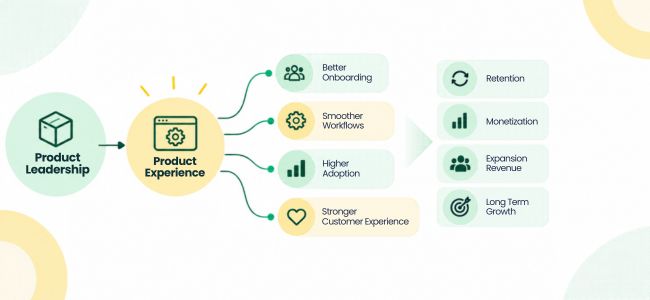
In a lot of software companies, growth is happening inside the product experience itself. A confusing onboarding flow can hurt retention. Slow workflows can reduce adoption. Poor prioritization decisions can quietly affect expansion revenue months later. That changes the role product leaders play inside the business.
The strongest product leaders today are not only managing delivery. They are helping companies decide where to focus, what customer problems actually matter, and which decisions create long-term growth instead of short-term activity.
- Product leadership is becoming more connected to business growth and company strategy.
- AI is accelerating execution speed and increasing prioritization pressure.
- Strong product leaders improve decision quality and operational clarity.
- Product leaders increasingly shape company direction and investment priorities.
- Growth-focused product organizations rely heavily on systems, alignment, and experimentation.
Product Leadership Has Moved Closer to Business Strategy
Inside many software companies, product leadership now sits much closer to core business strategy than before. That happened gradually.
As products became central to customer experience, companies started realizing that growth no longer depended only on sales expansion or marketing reach. Product experience itself began influencing whether customers stayed, expanded usage, or left quietly over time.
A confusing onboarding flow can hurt retention. Poor workflow design can reduce adoption. Weak prioritization can slow down customer value delivery. These are product decisions, though they eventually become business outcomes.
This is one reason product leaders now influence conversations around:
- Retention
- Monetization
- Customer engagement
- Platform direction
- Long-term differentiation
The role has become much broader than roadmap management alone.
Growth Is Increasingly Product-Driven
In many digital businesses, growth now happens inside the product itself. Customers expect products to improve continuously. They expect faster onboarding, smoother workflows, better usability, and quicker problem resolution. If that experience feels frustrating, switching products has become easier than ever.
That pressure is especially visible across:
- SaaS companies
- AI products
- Subscription platforms
- Digital ecosystems
As software becomes more deeply tied to business operations, product quality increasingly shapes retention, expansion revenue, customer loyalty and long-term growth. That naturally increases the strategic importance of product leadership.

Strong Product Leaders Improve Decision Quality
One of the least discussed parts of product leadership is decision quality. Strong product leaders usually help organizations make clearer decisions under pressure. That matters because most growing companies eventually face the same problem: too many priorities competing for attention at the same time. Without strong prioritization, teams slowly drift into reactive execution.
Work expands, coordination overhead increases, teams stay busy constantly, though meaningful progress becomes harder to sustain. Strong product leaders reduce that friction by improving:
- prioritization clarity
- execution focus
- resource allocation
- tradeoff decisions
They also help organizations stay connected to what actually creates long-term customer value instead of reacting to every short-term request. That discipline often influences growth more than companies initially realize.
Product Leaders Shape Retention and Expansion Revenue
Customer acquisition matters, though long-term growth usually depends on what happens after users enter the product. That is where product leadership becomes highly influential.
Strong product leaders spend significant time understanding:
- Where customers experience friction?
- Why does adoption slow?
- What improves engagement?
- How do customers realize value over time?
Small product improvements often create much larger business outcomes underneath the surface. A smoother onboarding experience can improve activation. Better workflow design can increase usage frequency and faster time to value can improve retention.
Over time, these decisions influence:
- Expansion revenue
- Customer loyalty
- Product stickiness
- Account growth
This is one reason many executive teams increasingly connect product leadership directly to business performance metrics instead of only delivery metrics.
AI Is Changing How Product Organizations Grow
AI is reshaping product organizations much faster than many companies expected. Teams can now analyze customer feedback faster, shorten experimentation cycles, automate workflows, and move from idea to iteration much more quickly than before.
Microsoft’s 2025 Work Trend Index highlighted how AI is changing workflows, execution speed, and operational expectations across modern organizations. This acceleration creates both opportunity and pressure.
Companies can launch faster, though they also need to prioritize faster. Teams can test ideas more quickly, though poor decisions also spread faster operationally. That makes strategic judgment much more important.
AI can improve execution speed significantly. It still cannot determine:
- Which opportunities deserve investment?
- Where customer value actually exists?
- What tradeoffs matter most?
- Which priorities align with the long-term direction?
Those decisions still depend heavily on product leadership.
Weak Product Leadership Often Creates Growth Friction
Weak product leadership usually creates visible operational patterns over time. Teams start operating across too many priorities simultaneously. Roadmaps become crowded, stakeholder requests continue expanding, while execution clarity weakens underneath the surface.
The result often looks like this:
- Fragmented execution
- Reactive prioritization
- Inconsistent customer experience
- Slower decision making
- Operational confusion
Most companies do not reach that point because teams lack talent. The problem is usually that the organization itself becomes difficult to operate within.
Strong product leaders help reduce that complexity. They create clearer priorities, improve alignment, and protect teams from unnecessary operational noise. That clarity compounds over time.
Product Leaders Increasingly Influence Company Direction
Modern product leaders increasingly shape decisions that extend far beyond product delivery. In many organizations, product leadership now influences:
- Investment priorities
- AI adoption
- Monetization strategy
- Customer experience direction
- Platform evolution
This becomes especially important inside software-driven companies where products heavily influence how the business competes overall. As markets become more crowded, companies rely more heavily on product leadership to identify meaningful opportunities and strengthen long-term differentiation. That changes the role significantly.
Product leadership is gradually becoming much more connected to company direction than traditional execution-focused PM structures were originally designed for.
Strong Product Leaders Build Growth Systems
Strong growth organizations rarely depend only on isolated ideas. They usually build systems that help teams learn, adapt, and execute consistently over time.
That often includes:
- Experimentation loops
- Customer feedback systems
- Prioritization frameworks
- Execution reviews
- Alignment rituals
These systems help organizations maintain clarity even as complexity increases. Without them, growth efforts often become reactive. Teams jump between initiatives, priorities change constantly, and execution quality slowly declines underneath the surface.
The strongest product leaders understand that sustainable growth usually comes from operational consistency rather than constant urgency.
What Separates Growth-Focused Product Leaders
Growth-focused product leaders usually think differently from reactive execution managers. They often:
- Simplify complexity
- Prioritize clearly
- Think in systems
- Improve decision quality
- Maintain organizational focus
- Understand customer behaviour deeply
The strongest leaders also recognize that growth rarely comes from feature volume alone. Long term growth usually depends on how effectively organizations retain customers, reduce friction, improve customer value, and continue adapting as markets evolve.
That perspective is becoming even more important inside AI-accelerated product environments where execution speed continues increasing rapidly.
Why Product Leadership Is Becoming a Growth Function
Product leadership used to sit much closer to execution than business growth. That separation is getting harder to maintain.
Products now influence retention, expansion revenue, customer experience, and even how companies compete in crowded markets. In many software businesses, growth problems eventually become product problems somewhere underneath the surface. That is why product leadership is becoming much more strategic.
The role is shifting away from roadmap coordination alone and moving closer to prioritization, operational clarity, customer value creation, and long-term business direction.
The companies that usually grow well over time are not always the ones shipping the highest number of features. More often, they are the ones making clearer decisions, staying focused longer, and improving the product experience consistently as customer expectations keep changing.
Frequently Asked Questions
1. How do product leaders influence business growth?
Product leaders influence growth by improving prioritization, customer experience, retention, monetization decisions, and long-term product value creation across the organization.
2. Why is product leadership becoming more strategic?
Product decisions now directly affect customer retention, expansion revenue, engagement, and market positioning, which naturally connects product leadership much more closely to business strategy.
3. How does product leadership affect customer retention?
Strong product leadership improves onboarding, usability, workflow efficiency, and customer value realization, all of which influence whether customers continue using and expanding within a product.
4. How is AI changing product leadership?
AI is accelerating execution speed, experimentation, and workflows across product organizations. That increases the importance of prioritization, judgment, and operational clarity.
5. What separates strong product leaders from reactive product managers?
Strong product leaders usually improve focus, simplify complexity, strengthen decision quality, and help organizations maintain alignment as operational pressure increases.
6. Why do product organizations struggle with growth?
Many organizations struggle because priorities expand faster than execution systems can support. Over time, that creates fragmented execution, operational confusion, and inconsistent customer experience.