What Makes a Good EMBA in Product Leadership? Six Essentials That Matter Most
- Career
- 5 min read
For many product professionals, there comes a time when on-the-job learning hits a ceiling. You know your craft, manage stakeholders, drive execution, and maybe even lead a team. Still, something feels missing. You want to move from managing to leading, from reacting to steering. That is when an Executive MBA becomes part of the conversation.
But not all programs are created equal. The right EMBA does more than adding a qualification. It shifts how you approach leadership, strategy, and influence. It strengthens your decisions and opens new doors.
If you are thinking about investing in one, here are six key signs to know whether a program is truly worth your time and effort.
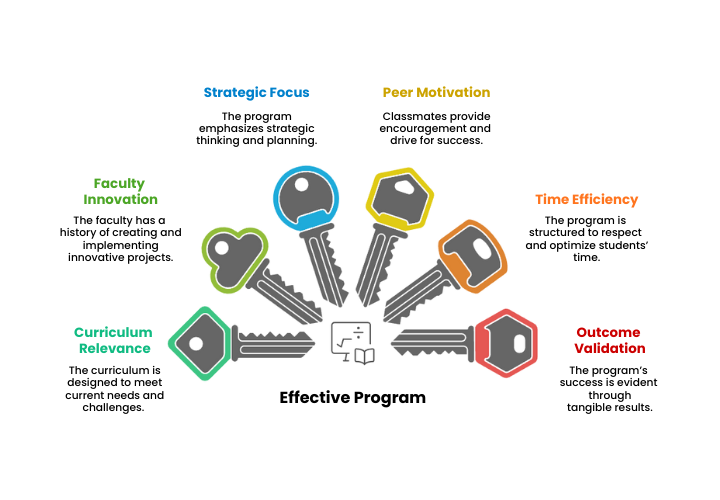
1. The Curriculum Feels Built for Today
A good EMBA in Product Leadership speaks to the world we are working in right now. It does not lean on business examples from two decades ago. Instead, it reflects how markets move, how customers behave, and how digital products are built and scaled.
The program should feel fresh. You want a product management leadership program that explores customer thinking, market gaps, experimentation, and team dynamics. Real learning happens when you see how strategy plays out in real business problems.
If you finish a class and immediately want to apply something you just learned, that is a good sign.

2. The Faculty Has Actually Built Something
There is a big difference between someone who teaches leadership and someone who has lived it. The most valuable instructors have done the work themselves. They have launched products, failed at some, improved others, and learned what works in the real world.
This is especially important for product professionals. Whether it is working through customer research, balancing roadmaps, or making decisions with limited data, you need insight from people who have been in those situations.
A great EMBA for product professionals connects you with mentors who teach from experience, not just slides.
3. Strategy Is at the Heart of the Program
You are not joining an EMBA to learn how to be more efficient. You are doing it to become more strategic. That means the focus should not be on doing more tasks but on making better choices.
Look for a product strategy EMBA that helps you see the bigger picture. You should walk away understanding how to link product efforts to business goals, how to prioritize effectively, and how to communicate strategy in a way that inspires teams and earns trust.
The ability to think clearly when things get messy is what sets real leaders apart.
4. Your classmates push and motivate you
Your experience is shaped by the people you learn with. Professionals from various jobs and industries who are all committed to progress come together in a powerful EMBA. Diversity adds a level of learning that content alone cannot provide.
You learn from their questions, from their mistakes, and from how they see the world. If you are in a room where people make you think harder and aim higher, you are in the right place.
Many of the best EMBA programs in India and elsewhere are known for the peer networks they create. These connections often lead to collaboration and career shifts later on.
5. The Format Respects Your Time
No one has time to waste these days. You are already busy. The program must be designed to fit around your work, not interrupt it. Look for formats that allow you to stay in your job while learning.
Whether the program offers weekend sessions or a blend of live and recorded classes, what matters is how easy it is to stay consistent without burning out.
Flexibility should not mean less depth. A good EMBA for product professionals gives you the structure to commit and the space to reflect. That balance makes growth possible without pushing everything else aside.
6. The Outcomes Speak for Themselves
Before you apply, ask where the alumni are now. A strong EMBA should lead to visible progress. That might mean a bigger role, a shift into strategy or simply the confidence to take on more.
You should see evidence of career growth with EMBA experiences shared openly. Do graduates talk about leading product teams more effectively? Have they stepped into new spaces where they influence company direction?
True innovation-driven leadership is about thinking long term, staying curious, and continuing to grow. The right program helps you become that kind of leader.
Bringing It All Together
Choosing an EMBA is a personal decision. You are not just picking a program to add to your resume. You are choosing how you want to grow, what kind of leader you want to become, and where you see yourself contributing next.
Some programs give you a good overview. Others push you to shift how you think and how you lead. The second kind stays with you long after graduation.
If you are exploring options, you might want to take a look at this Executive MBA in Product Leadership. It is built around the real challenges product professionals face every day and offers a structure that fits into the life of someone who is already building their career.
In the end, what matters is whether it moves you forward. The right program will not just help you grow. It will help you lead differently.
Frequently Asked Questions
It is a leadership-focused Executive MBA program tailored for those working in product, design, technology, or related functions. It helps professionals move into strategic roles.
This type of program places heavy emphasis on aligning product thinking with business goals. It covers areas like roadmap prioritization, market analysis, and innovation.
Yes. The best EMBA programs in India and globally are designed for professionals who want to grow without pausing their careers.
Many graduates go on to lead product teams, move into strategy roles, or launch their own ventures. More importantly, they gain clarity and leadership confidence.
The program sharpens your ability to think like a business leader while staying rooted in customer and product value. That combination makes you more effective in high-impact roles.
Our Popular Product Management Programs