








MBA in Entrepreneurship
MBA in Entrepreneurship is a specialized MBA program focused on building founders, startup leaders, and intrapreneurs. It helps learners develop the skills to spot opportunities, validate ideas, and execute venture growth in real-world, uncertain environments.
MBA in IT Entrepreneurship Course Overview
MBA in Entrepreneurship is developed to meet the needs of professionals who desire to develop, test, and grow innovation-driven businesses in an age of technology. Beyond the conventional theory of entrepreneurship, the program focuses on practical venture creation, by way of innovation laboratories, exposure to breakout technologies, and validation of solution in real-world. The curriculum combines technological strategy and innovation with leadership and team management so that learners will be able to recognize trends in technology, evaluate the impact of businesses on them, analyze their viability, build plans of execution, and manage a high-performance team when operating in an uncertain environment. The program is provided within the MBA in Technology Management system, which equips graduates with the skills to be founders, startup leaders, and intrapreneurs in existing organizations, through a combination of entrepreneurial thinking and solid business and technology underpinnings.
ELIGIBILITY AND ADMISSION CRITERIA
The Applicants of MBA in Business Analytics Program must possess:
- A Bachelor’s degree in any field of study from a recognized university.
- Curiosity in analytics, business strategy or technology leadership.
Selection Process:
- Application & academic review
- Aptitude assessment
- Personal interview and Group Discussion.
No previous entrepreneurial experience is needed. The program can be applied to new graduates and young professionals who want to start their careers as entrepreneurs.
SCHOLARSHIPS
The scholarships (merit and need-based) can be offered to qualified applicants depending on:
- Academic performance
- Entrance assessment
- GD/PI performance
- Leadership potential or achievements
Scholarship consideration happens during the admission process, and results are shared with the admission decision.
Entrepreneurship MBA Syllabus
The Syllabus of MBA in Entrepreneurship is aimed at enabling future founders and innovation leaders to create, refine and grow ventures in a dynamic marketplace. The curriculum blends entrepreneurial thinking, business fundamentals, and hands-on execution to equip learners with the skills required to identify opportunities, test ideas, and make informed decisions under uncertainty. When structured frameworks, real-world projects and constant experimentation are used, students get to know how to turn ideas into viable business models.
Core Subjects MBA in Entrepreneurship
The program entails the major entrepreneurial competencies, such as:
- Opportunity Identification & Market Discovery
- Business Model Design & Validation
- Innovation Strategy & Competitive Advantage
- Startup Finance & Funding Fundamentals
- Product & Venture Strategy
- Go-to-Market Planning & Growth Strategy
- Leadership for Startups & Team Building
- Legal, Ethics & Risk Management for New Ventures
These courses also assist the students in thinking like founders as they create solid business and leadership platforms.
Technical Tools Covered in
The exposure to the tools commonly used, including those mentioned below, is aimed at supporting the venture creation and experimentation among the students:
- Business Model Canvas & Lean Startup tools
- Market Research & Customer Discovery tools
- Financial Modelling & Forecasting tools
- No-code / low-code prototyping platforms
- Pitch deck and storytelling tools
- Project planning and collaboration tools
The emphasis is on selecting the appropriate tools that would validate ideas in a fast and efficient way.
Capstone Project & Applied Learning
Students apply what they learn through real-world practice experiences, including:
- Business case assignments
- Innovation Labs
- Hands-on group projects
- A guided end-to-end Capstone Project
The capstone requires learners to take a venture idea from concept to validation using structured frameworks and real-world testing. Learners build a business model and execution plan, then present their final venture pitch to faculty and/or industry reviewers.
MBA In TECHNOLOGY MANAGEMENT
Become a Business Analyst with Placement Guarantee
- 24 Months
- Full Time
- Accredited Degree
- On Campus
- Integrated 2 paid internships at Technology companies
- 100% Job Guarantee*
Career path after the MBA in IT Entrepreneurship course
MBA in Entrepreneurship provides numerous career opportunities in startups, technology-based ventures, and innovation-driven positions in the existing companies. Graduates can be prepared to create new ventures, grow early-stage businesses or innovate and develop digital projects as intrapreneurs. The program equips the learners with opportunities to work in high-growth environments and be able to identify opportunities, design business models, execute and lead.
Job Roles After MBA in Entrepreneurship
The program graduates have numerous opportunities wherein they can work in positions such as:
- Startup Founder / Co-Founder
- Entrepreneur-in-Residence (EIR)
- Product Manager / Innovation Manager
- Business Development & Growth Manager
- Venture Analyst / Startup Consultant
- Intrapreneur / Digital Transformation Lead
Career Impact and Accelerated ROI
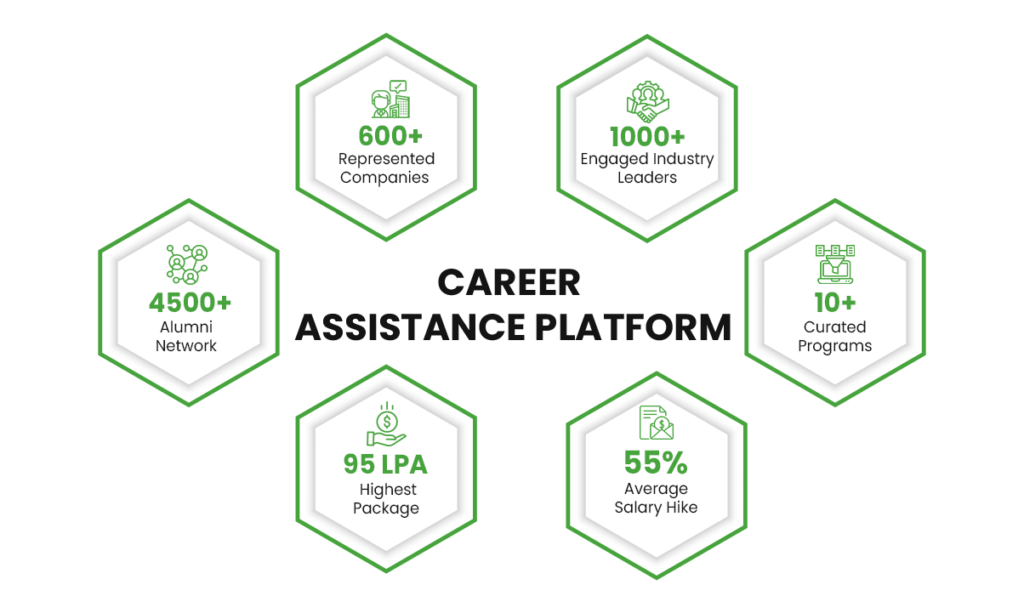
The Institute’s signature Career Assistance Platform (CAP) provides dedicated support for program participants through
- Guaranteed Paid Internships and Job
- Exclusive Hiring Events
- 1:1 career coaching
- Career & Mock Interview Workshops
- Resume Preparation and Portfolio building
Learn from the people who “Do”, not just teach.
Global Practitioner Faculty at the Institute
Manjunath Subramanian
Director of Product
Management
Anand Shrivastava
Sr. Director of Product Management
Muthuraj Thangavel
Senior Product Manager
Akash Chandan
Staff User Experience
Researcher
Hear from Successful Alumni

My interest in product management as a career was triggered by the emergence of new digital products in India. The unique aspects of IPL were the learning by doing model, individual mentoring and high exposure to the industry. The Talentathons, final project and industry practitioners served as a means by which I was able to gain actual experiences to work with products instead of mere theories. The opportunities at the campus and the alumni network contributed significantly to my development. Today, as a Product Manager, I can confidently say this program helped turn curiosity into a meaningful career path


As a non-tech person, I needed exposure to learning that was not theory based but one that enabled me to develop real product skills. Mentorship opportunities by practitioners in the industry, project work, and similar opportunities, such as Talentathons, allowed me to solve real business issues and present my skills to prospective hiring managers. The learning-by-doing concept of the program provided me with the confidence and experience which I require to enter the product management field. I am an Associate Product Manager with Thomson Reuters on this day and can easily discern how this program has influenced my career choice.

Prior to switching to product management, I spent several months researching on programs to get the best one. IPL was unique due to its industry-based curriculum, live learning process, and good network of alumni. The practical experience in the final projects, individuals who have shaped the industry, and the exposure to a wide variety of colleagues allowed me to develop professionally and personally. Learning-by-doing method helped me to gain clarity, confidence, and skills that I could use right away. Today, working as a Product Manager, I can confidently say this program played a major role in shaping my career path.

Having considered the conventional MBA programs, I found that the future of business is closely intertwined with the technological aspect, and a Tech MBA sounded much more reasonable. IPL was unique since the faculty are actual leaders in the industry and they teach not out of the text book but through practical exposure. The career advisory system, alumni network and practical learning in Skillathons taught me confidence and skills directly related to the real world problems. The support and community are still very strong even several years after graduation. Choosing this program played a huge role in helping me grow into a product management role and accelerate my career.

Five years into my QA position, I needed to get out of doing and see how the product structure is created and how decisions are made. I did not want an average MBA but one that majored in product management, and IPL was one of the only programs that majored on product management. The applied learning method, practical exposure, and professors who are industry experts gave the experience a meaning and practicality. The community, the ROI and the learning-by-doing model assisted me in making a smooth transition into product roles.

Having some experience in the computer science field and two years as a QA analyst, I desired a program that would bridge the gap between technology and management instead of offering two different programs. I initially had a plan of studying abroad and even got several international admits, but the curriculum and approach at IPL fitted perfectly in what I wanted. My choice was determined by the trust placed in the institution by the results, the curriculum being very industry-driven and the practical learning provided by innovation and product labs. The diverse cohort and exposure to AI-driven learning reinforced that I chose the right environment to grow into a product-focused leadership role.

I explored many MBA programs, but most felt too traditional and not aligned with the digital world we're moving into. What stood out about IPL was the perfect blend of business skills, technology management, and people management. The experiential learning, talentathons, and internship opportunities give real industry exposure, not just theory. The LMS access and career guidance even after graduation showed me they genuinely invest in students. For anyone considering a technical MBA, IPL has been a hidden gem and the right choice for my career.

After exploring several MBA programs, IPL stood out because of its unique curriculum and hands-on approach. Instead of just learning concepts, we apply them immediately, which makes the experience practical and meaningful. The program is designed for the future, covering everything needed for careers in product leadership and technology. The guaranteed internships and job support were a major confidence booster because it's something most colleges don’t offer. Choosing IPL has helped me move closer to my goal in product management with clarity and real industry exposure.

Coming from an aeronautical engineering background and a technical role, I wanted a program that could help me grow into leadership and business-facing roles. Most MBA programs I explored felt traditional, but IPL stood out with its technology-led curriculum and strong focus on AI, industry relevance, and future skills. The faculty are actual industry practitioners, which makes the learning practical and current, not just theoretical. This program truly integrates business, technology, and leadership in a way that prepares you for the world ahead. For engineers aiming to move into impactful leadership roles, IPL has been the right choice

Frequently Asked Questions
1. What is an MBA in entrepreneurship?
MBA in Entrepreneurship provides graduates with skills to build, test and grow businesses by use of innovation, strategy and leadership.
2. What is entrepreneurship as a course?
The entrepreneurship course imparts how to generate ideas, how to create business models, how to validate ideas in the market and how to implement a venture.
3. Which skill is best for entrepreneurship?
Problem-solving is the most important entrepreneurial skill, and it is complemented by decision-making and leadership.
4. Is entrepreneurship a good course?
Yes, entrepreneurship is a course that people can pursue if they have an interest in launching businesses or spurring organizational change.
5. What jobs can I get in entrepreneurship?
The most typical ones are startup founder, product manager, innovation manager, business development head, and intrapreneur.
6. What is a good age to start entrepreneurship?
Entrepreneurship has no age requirement and it is the ability, attitude, and action that determine success, and not age.
7. Which Course is best for entrepreneurship?
MBA in Entrepreneurship is one of the most ideal courses because it integrates business knowledge and practical venture building.
8. What are the 4 types of entrepreneurship?
These are four categories, which are small business entrepreneurship, scalable startup entrepreneurship, corporate entrepreneurship, and social entrepreneurship.
9. Is an MBA worth it for entrepreneurship?
Yes, an MBA is worth it in entrepreneurship because it develops strategic, financial, and leadership skills.
10. Which MBA has a high salary?
Technology-focused MBAs such as MBA in Technology Management often offer higher salary potential.
11. Which Bangalore MBA is best for entrepreneurs?
The MBA in Technology Management with an Entrepreneurship focus by the Institute of Product Leadership is a strong choice for aspiring entrepreneurs.