Defining a Product Manager : A Clear Guide to Product Management in 2026

Product Management is currently among the most in-demand jobs in both technology and business teams. However, the question of what exactly a Product Manager does continues to confuse professionals, hiring managers, and even founders.

On the ground level, a Product Manager would determine what is to be built, why it is to be built and what success should be. This role links customer requirements, business objectives and technical limitations all to a single coherent product direction.

With companies now competing on product experience more than ever before, Product Managers are starting to become the core of growth, retention and innovation. The guide is a concise and comprehensive definition of a Product Manager with real-life practice, career wisdom and market information.

Key Takeaways:

  • Product Managers are decision makers, not task managers
  • The role exists to reduce product failure and wasted development effort
  • Business value, usability, and feasibility form the core pillars
  • Deep coding skills are optional, strategic thinking is essential
  • Salary growth reflects increasing market demand
  • Product Management offers long term career progression into leadership

What is a product manager?

A Product Manager has the responsibility of establishing the path of a product and taking it through idea to launch and beyond. This role guarantees that the products provide the solution to real customer problems and can provide business value.

In basic terms, a Product Manager resolves three questions that inform each product decision.

  • What problem should be solved
  • Why this problem matters to users and the business
  • What solution creates the most value right now

Rather than managing tasks or timelines, Product Management focuses on outcomes. A Product Manager is accountable for whether a product succeeds or fails in the market.

The three pillar model

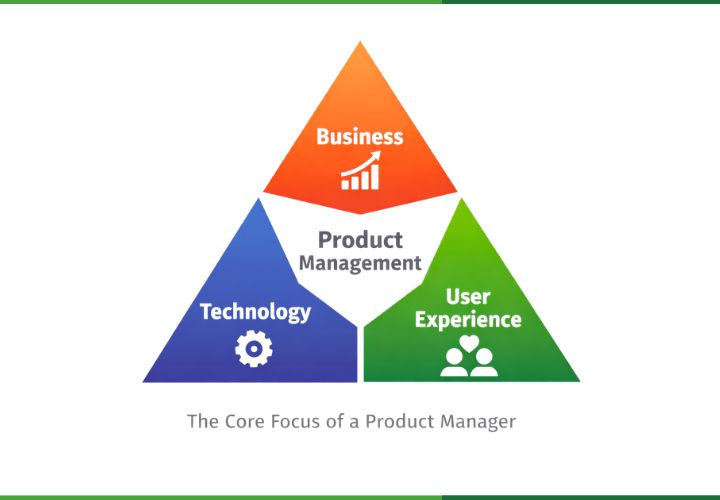
Every Product Manager operates across three core pillars.

  1. Business value – Ensures the product supports revenue, growth, and company strategy. This includes pricing decisions, market positioning, and prioritization based on commercial impact.
  2. User experience – Makes the product applicable, user-friendly, and customer-oriented. This consists of user research, feedback and usability testing.
  3. Technical feasibility – Assures that there is a realistic possibility of building and maintaining the solution within engineering constraints, timelines and infrastructure constraints.

When all three pillars are balanced in each decision, then the Product Management is strong.

Who Decides What to Build and Who Decides How?

One of the most important distinctions in Product Management is the separation between what and how.

Product Managers decide what should be built and why it matters. Engineering teams decide how that solution will be implemented.

This split keeps teams focused on outcomes instead of just shipping features. The Product Manager defines goals, constraints, and success metrics. Engineers determine architecture, implementation, and optimization.

Why this role exists

Reducing uncertainty in product development is the purpose of the Product Manager position. Lack of clear product leadership has a high probability of teams developing features that no one uses, pouring too much money into ideas with little value, missing the market, and creating fragmented user experiences.

Product Management creates focus, alignment, and accountability across teams.

Core focus of a product manager in Product Management

What a Product Manager actually does and does not do?

A Product Manager’s work shifts constantly between strategy and execution. The role is broad, but it is not vague.

What a Product Manager actually does

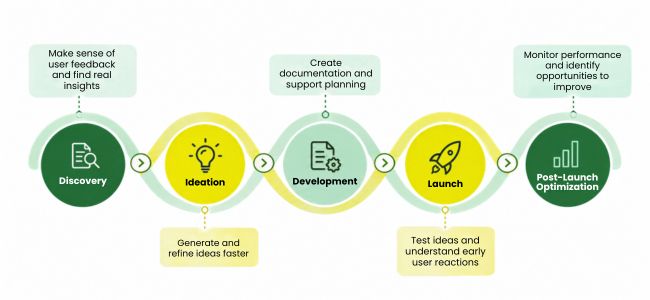
  • Setting product direction – Product Managers establish the purpose of the product, the problem to be addressed, and success. Its aim is to provide the team with a sense of direction and objective.
  • Using user input to guide decisions – Product Managers review customer feedback, track how people use the product, and follow market changes. This helps them spot real problems worth solving instead of building features based on assumptions.
  • Choosing what to build next – Product Managers consider the ideas, requests of the users and business priorities and make decisions on what is worth being worked now, what can be postponed and what is not worth working on.
  • Turning ideas into clear work – When an idea moves forward, Product Managers write simple requirements that explain the problem and what success should look like. They focus on clarity and leave technical design decisions to engineers.
  • Keeping teams aligned – The Product Managers maintain frequent connections with designers, engineers, sales teams, marketers, leaders and support teams. The aim is to address conflicts, control trade offs, and ensure that all the individuals are geared towards the same priorities.
  • Improving the product after launch – Product Managers stay involved after release by tracking performance, reviewing user behavior, and deciding what should be improved next. Each launch becomes an input for the next set of decisions.

In short, a Product Manager owns product outcomes from discovery to delivery to improvement.

What a Product Manager does not do?

  • Product Manager does not manage detailed project timelines. That responsibility usually belongs to project or program managers.
  • A Product Manager does not write production code or design user interfaces. Those responsibilities belong to engineering and design teams.
  • A Product Manager does not run marketing campaigns or sales operations. They support positioning and go to market strategy, but execution sits with marketing and sales teams.

The role is not about doing everything. It is about making the right decisions and enabling teams to execute effectively.

Product Manager vs related roles

Product Management is often confused with similar-sounding roles. Understanding the differences helps clarify scope and responsibility.

Role

Focus

Main responsibility

Product Manager

Product direction

Defines what to build and why

Product Owner

Delivery execution

Manages backlog and sprint priorities

Project Manager

Timelines

Tracks schedules and delivery plans

Program Manager

Multi-team alignment

Coordinates large initiatives

Product Marketing Manager

Go to market

Positions product and drives adoption

A Product Manager remains responsible for overall product outcomes, even though many supporting roles contribute to delivery and growth.

Key Skills Every Product Manager Needs

Product Management rewards people who can think clearly, communicate well, and make tough decisions with limited data.

  1. Strategic thinkingThe ability to define long term direction and connect daily work to business goals.
  2. Communication and stakeholder management – The ability to align diverse teams, influence decisions, and handle conflicting priorities.
  3. Data analysis and metrics – The ability to measure impact, interpret trends, and guide prioritization using evidence.
  4. User research and empathy – The ability to understand customer behavior, pain points, and motivations.
  5. Technical understanding – The ability to collaborate effectively with engineers and assess feasibility.
  6. Prioritization and decision making – The ability to choose what matters most when resources are limited.
  7. Leadership without authority – The ability to guide outcomes without formal power.

Product Management is often confused with similar-sounding roles. Understanding the differences helps clarify scope and responsibility.

Role

Focus

Main responsibility

Product Manager

Product direction

Defines what to build and why

Product Owner

Delivery execution

Manages backlog and sprint priorities

Project Manager

Timelines

Tracks schedules and delivery plans

Program Manager

Multi-team alignment

Coordinates large initiatives

Product Marketing Manager

Go to market

Positions product and drives adoption

A Product Manager remains responsible for overall product outcomes, even though many supporting roles contribute to delivery and growth.

Product Manager salary and pay scale

Product Manager salaries reflect the strategic value of the role and the high demand across industries. Based on aggregated industry data and trends referenced in salary research:

Global salary overview

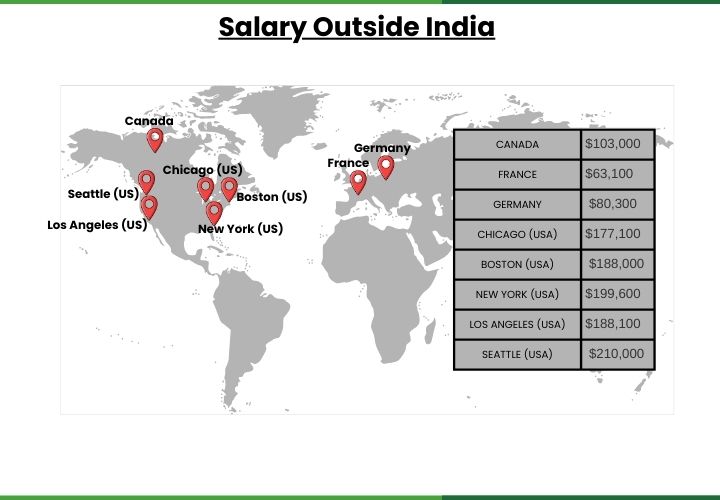
Here’s a look at average salaries in key international markets. Salaries in North America and Europe are typically much higher than in India, reflecting the demand for skilled professionals and the cost of living.

Salary Infographic showing salaries outside India

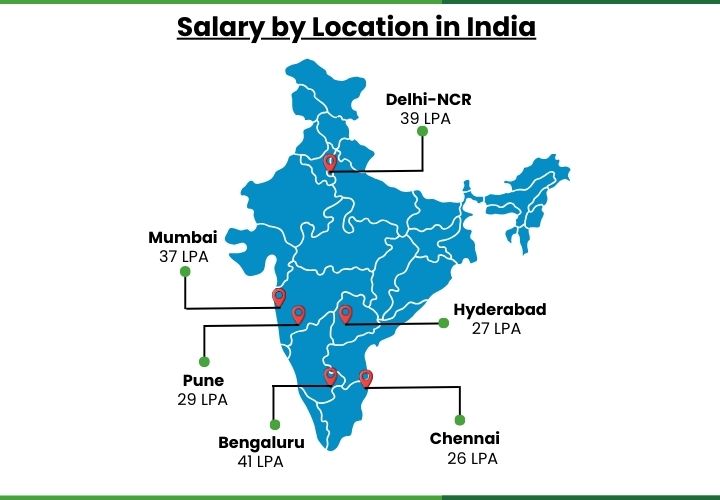
Product Manager salary in India

India has seen rapid salary growth for Product Managers over the past decade.

Experience level

Annual salary range

Entry level

800000 to 1200000 INR

Mid level

1500000 to 2500000 INR

Senior level

3000000 to 4500000 INR

Salary by experience

  • Entry-level Product Managers typically start with moderate base salaries but see faster growth within the first three years.
  • Mid-level Product Managers command higher base pay and performance bonuses as they take on larger product scopes.
  • Senior Product Managers often earn significantly more due to leadership responsibility and business impact.
Salary Infographic showing Product Manager salaries in India

Career Path in Product Management

Product Management offers one of the most flexible and scalable career paths in modern business.

Entry routes into Product Management

Many professionals move into Product Management from Engineering, Design, Marketing, Consulting, and Business Operations. Formal degrees are less important than demonstrated problem solving ability, communication skills, and product thinking.

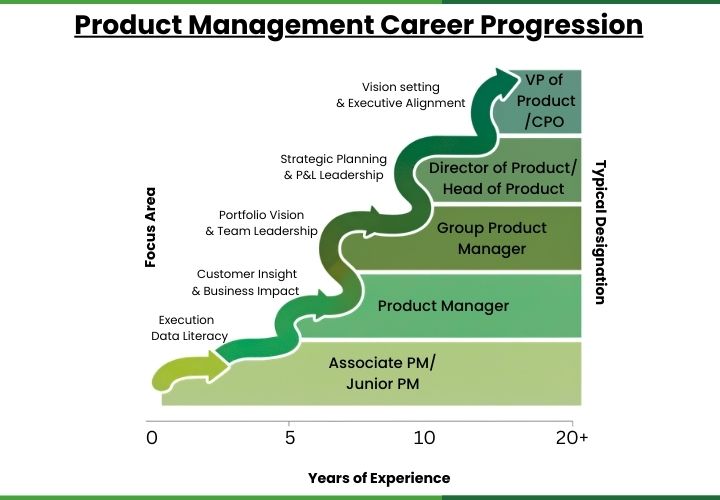
Career progression

Product Management offers one of the most flexible and scalable career paths in modern business.

Entry routes into Product Management

Many professionals move into Product Management from Engineering, Design, Marketing, Consulting, and Business Operations. Formal degrees are less important than demonstrated problem solving ability, communication skills, and product thinking.

Career progression

Title

Typical experience

Scope

Associate PM

0 to 2 years

Feature ownership

Product Manager

2 to 5 years

End to end product ownership

Senior Product Manager

5 to 8 years

Strategic initiatives

Group Product Manager

8 to 12 years

Team leadership

Director of Product

12 to 15 years

Portfolio management

Chief Product Officer

15 plus years

Company wide strategy

Infographic showing product management career progression and years of experience

Final Thoughts

Product Management has become a main business function in all industries. A Product Manager defines what to build, why it matters, and how success is measured. This position integrates leadership, strategy, empathy, and analysis into a single discipline. It exists to reduce product risk, align teams, and create meaningful value for both customers and companies.

For professionals seeking a career that blends creativity with business impact, Product Management offers long-term growth, competitive salaries, and leadership opportunities.

Frequently Asked Questions

A Product Manager defines product vision, prioritizes features, aligns teams, and ensures products deliver business value.

Yes. It offers strong salary growth, leadership potential, and demand across industries.

No. Technical understanding is helpful, but coding is not mandatory.

Salaries vary by region and experience. Global averages range from 60000 to 140000 USD annually.

Product Managers define product direction. Product Owners manage delivery execution.

Facebook
Twitter
LinkedIn